Most electrical faults announce themselves long before they become dangerous. The difficulty for a property owner is knowing which signs deserve a call-out today and which can wait for a scheduled visit. These six are worth taking seriously on residential, commercial and industrial properties alike.
1. Breakers that keep tripping
Repeated tripping can point to an overloaded circuit, a faulty appliance or a wiring fault. Avoid simply resetting the breaker each time it happens: the trip is protecting the circuit, not fixing the fault. If the same breaker trips again after a reset, or trips with nothing obvious on the circuit, the circuit needs to be tested rather than reset.
2. An old or poorly labelled distribution board
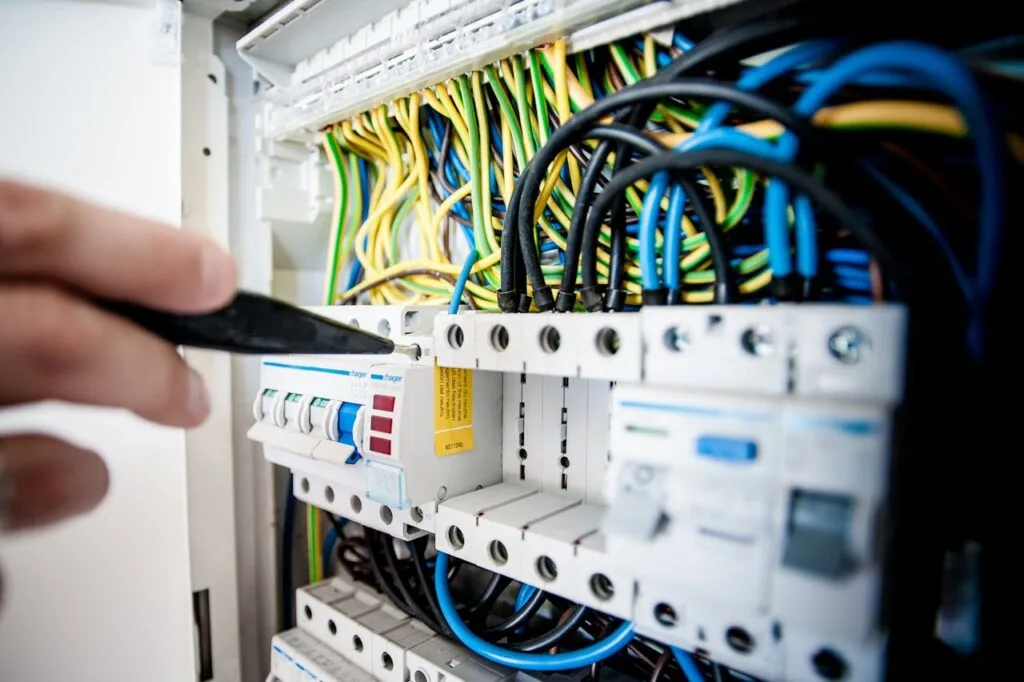
Older distribution boards were designed for far smaller electrical loads than a modern property carries. Boards with unclear labelling, damaged components, scorch marks or a warm casing should be assessed by a qualified electrician. If the board smells hot or shows discolouration, stop using the affected circuits and arrange an inspection.
3. Burning smells or scorch marks
A persistent burning-plastic smell near a plug, socket, light fitting or distribution board is a reason to stop using that circuit. Keep people away from the affected fitting, switch off the supply at the board if it is safe to do so, and arrange for a qualified electrician to inspect it before the circuit is used again.
4. Warm sockets, discoloured switches or flickering lights
Switches and sockets that feel warm, discolour around the edges or spark when operated usually point to a loose connection or a failing component. Flickering or dimming lights across more than one room can indicate a supply or wiring issue rather than a bulb problem. Either symptom is worth recording before the electrician arrives: which circuit, which room, and how often it happens.
5. Buying or selling a property without a COC
If a Certificate of Compliance may be required, arrange the electrical inspection early. Faults often have to be corrected before a certificate can be issued, and leaving the inspection until transfer day creates avoidable delays for everyone involved. BITO ELECTRICAL carries out COC inspections for residential, commercial and industrial properties in Cape Town.
6. Dark entrances and failing outdoor lighting
Security lighting only works while the fittings work. Entrances, gate areas and dark access points that are unlit, dimming or tripping the circuit leave a property exposed after dark. Outdoor fittings also take more weather and heat than indoor ones, so a fitting that has started to fail should be replaced rather than left.
When to call instead of waiting
If there is smoke, a burning smell, exposed live wiring or any other immediate danger, keep people away and call for professional assistance. BITO ELECTRICAL keeps a 24-hour emergency call-out standby for electrical faults in Cape Town and surrounds.
For anything that is not urgent, describe what you are seeing in the quote form on this page. Your details open in WhatsApp so the message goes straight to the team, with your area, the service you need and a short description already filled in.